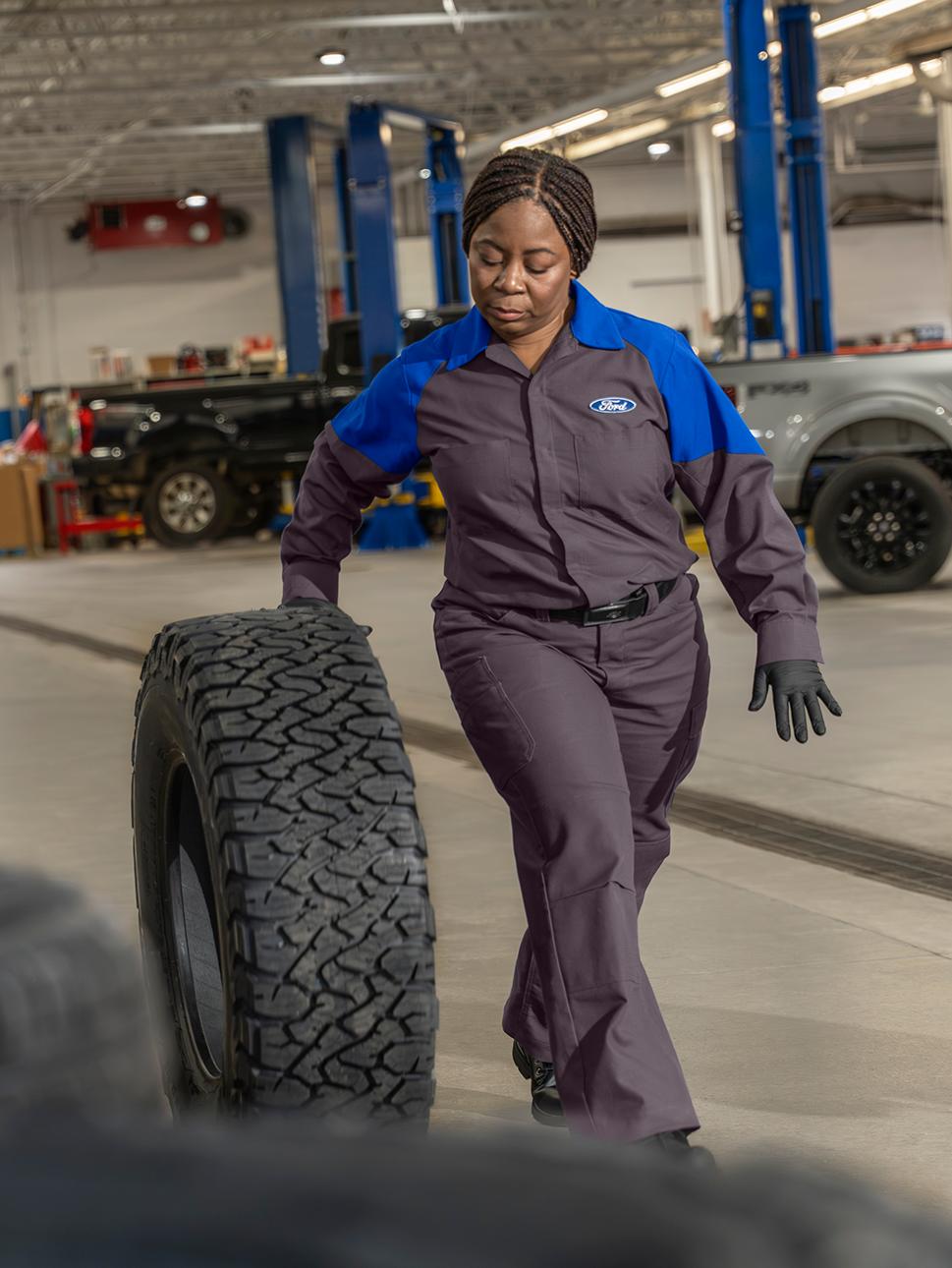
Brakes Peace-of-Mind Pros
Real parts. Real pros. Real easy.
Real parts. Real pros. Real easy.
Our techs are experts at telling the difference between normal wear and worn out. And if your brakes need replacing, you’ll get expertise you can trust, and an offer worth pulling over for.

Independent shops can service brakes, but Ford Dealerships offer factory-trained technicians, genuine Ford Parts, and the latest diagnostic tools. This helps ensure optimal performance, safety, and warranty protection.
Your driving habits significantly impact the lifespan of your brakes. Aggressive driving — characterized by frequent hard braking, rapid acceleration followed by sudden stops — and driving in heavy stop-and-go traffic will cause your brake pads and rotors to wear out much faster. Conversely, smooth, anticipatory driving — where you gradually slow down and avoid sudden braking — minimizes wear and prolongs the life of your braking components. Carrying heavy loads or towing frequently also puts extra strain on your brakes, leading to increased wear.
Brakes typically last 40,000–60,000 miles, depending on driving habits, terrain, and load. Regular inspections by Ford Service professionals help ensure timely replacement.
Signs of brake wear include:
A Ford-certified technician can inspect pads and rotors for safety and performance.
Prompt inspection by Ford Service helps ensure safety.
Brake Pads: Friction material that clamps onto rotors to slow the vehicle. Pads wear faster than rotors and protect the braking system.
Brake Rotors: Metal discs attached to wheel hubs. They dissipate heat and provide the surface for pads to press against. Rotors wear over time and may warp, groove, or crack.
If rotors show warping, grooves, or are near minimum thickness, replacement is recommended. Otherwise, rotors 1 mm above minimum may not need replacing. Using genuine Ford rotors ensures proper fit and performance.
Brake pedal pulsing or steering wheel vibration is typically caused by a variation in thickness or runout of the brake rotors, often referred to as warped rotors. This means the rotor surface is no longer perfectly flat, leading to uneven contact with the brake pads.
A Ford-certified technician can inspect your rotors to determine if they can be turned (resurfaced) to restore an even braking surface, or if they need to be replaced entirely. For optimal safety and performance, replacing warped or damaged rotors with genuine Ford Parts is often the recommended solution.
Brake squealing can stem from several causes. The most common reasons include worn brake pads, where the built-in wear indicators begin to rub against the rotor. Other factors can be moisture, debris, or a thin layer of rust on the rotors, especially common in the mornings due to dew, fog, or rain. Improper lubrication during installation or the use of non-genuine brake parts can also contribute to squealing. While a slight squeak after your vehicle has been sitting overnight might be normal, persistent or loud squealing warrants inspection by a Ford Service technician to rule out more serious issues.
Using genuine Ford brake parts is crucial for several reasons. They are specifically engineered and tested to meet the exact specifications and performance standards of your Ford vehicle, ensuring optimal fit, function, and durability. Genuine parts contribute to your vehicle’s overall safety, maintain its original braking performance, and help preserve your warranty. Aftermarket parts may not offer the same level of quality or compatibility, potentially leading to premature wear or compromised braking effectiveness.
Brake fluid transmits pedal force to the calipers. Over time, it absorbs moisture, reducing braking efficiency and causing corrosion. Regular checks and replacement maintain performance. Use the online Scheduled Maintenance tool to check your schedule.
Brake wear can vary because of driving conditions, vehicle type, and driving habits. We recommend having your brakes checked at every maintenance visit. Refer to your Owner’s Manual for specific recommendations. Have your brakes inspected at your preferred Ford Dealer immediately if you notice:
Schedule service through your local Ford Dealer online, in the Ford app, or by calling your dealer directly. Refer to your vehicle‘s Owner‘s Manual and Maintenance Schedule for vehicle-specific information. Ford Mobile Service and Ford Pickup & Delivery * are convenient and complimentary ways to service your vehicle without having to leave home.
Ford Rewards is a loyalty program that helps you get the most out of owning and enjoying your Ford vehicle. Earn Points on every eligible Ford purchase and then redeem those Points * for rewards you want. Complete Tier Activities to move up to Bronze, Silver, and Blue Tier status and unlock even more member benefits. **